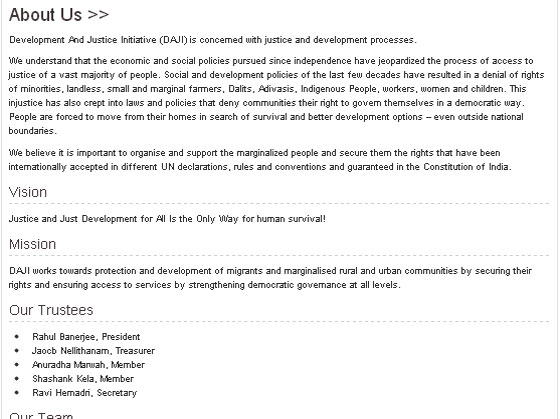
The Development And Justice Initiative (DAJI) is an Indian non-governmental organisation (NGO) that works to protect the rights of refugees, migrant workers, displaced people and other marginalised groups. Its focus is preventing loss of citizenship, combating statelessness and supporting coexistence, through information, training and hands-on support. Its website groups this work under four themes: minority rights, refugee protection and assistance, migration, and statelessness.
Raghwendra Web Services (RWS) has built and looked after DAJI's website since 2012. The site has moved through three platforms (Joomla 1.5, Joomla 3 and Drupal 10) and several custom designs, and RWS also looks after the domain, hosting, SSL certificate and security around it, under a yearly maintenance contract. Established in 2005, RWS has delivered 650+ projects for clients in 20+ countries.
The brief
DAJI needed a dynamic website that its own team could update. A dynamic website builds its pages from stored content, so staff can add and change material without a developer. DAJI's material comes in several kinds: news of activities and events, reports and briefing papers, descriptions of projects, and fixed pages about the organisation. A content management system (CMS), the tool content editors use to publish pages, was the right base from the start.
The client also asked how its content should be organised, so that each kind of material had a clear place and visitors could find it. RWS answered that question as part of the build, not after it.
DAJI did not want to run the technical side of a website. RWS took on the domain, hosting, SSL certificate and security, so the organisation had one contact for anything that affected the site.
Three platforms, one site
DAJI's site has been rebuilt and upgraded at each stage, not left to age. Each phase brought a new custom design and a step forward in platform.
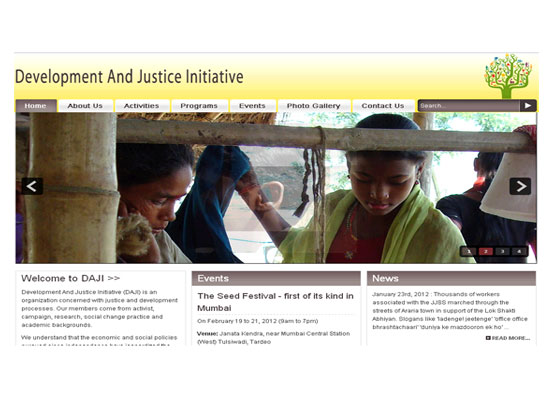
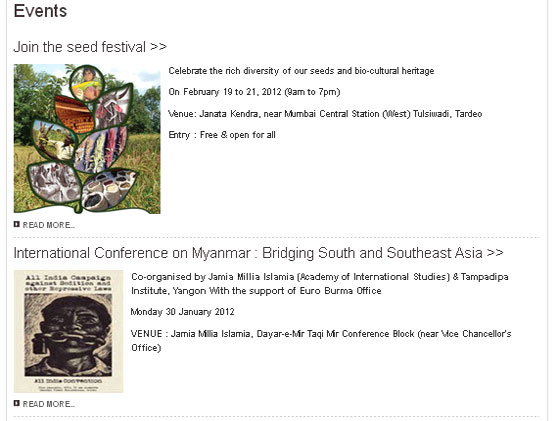
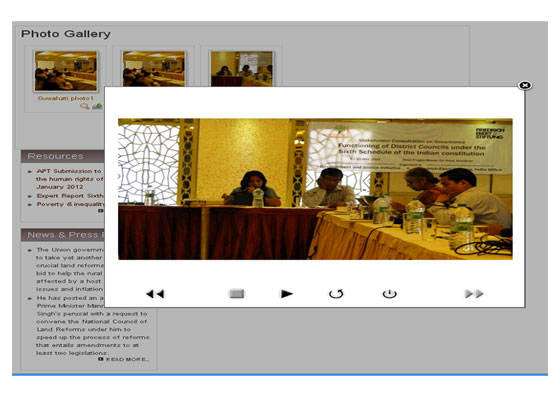
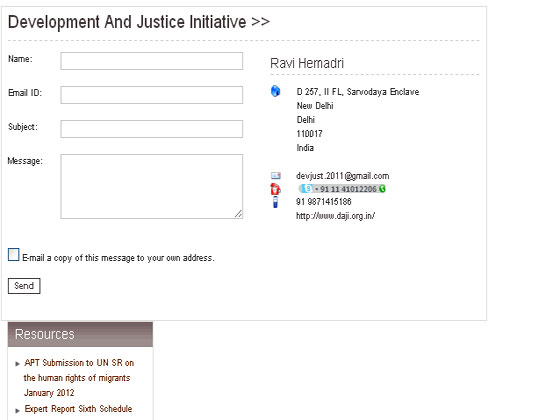
2012: the first site on Joomla 1.5
DAJI's enquiry came in January 2012, when Joomla 2.5 had only just been released. RWS used Joomla 1.5, the established release, and built the first site on it.
2016: a hacked site, found and fixed by RWS
In 2016, DAJI's website stopped working properly. RWS looked into it and found malicious code added to the PHP files across the Joomla site, and to the JavaScript in the template file. RWS removed it and sorted out the site's security.
The clean-up was RWS's work, done as part of its maintenance support, so DAJI did not have to manage it.
Late 2017: Joomla 3 and a responsive layout
RWS upgraded the platform to Joomla 3 and redesigned the site with a responsive layout, so the same pages adjust to phones and tablets. A responsive layout is one set of pages that rearranges itself to the width of the screen, not a separate mobile site, so DAJI has one site to update.
October 2023: the move to Drupal 10
In June 2023 RWS recommended moving the site from Joomla to Drupal 10, for stronger security and a more robust platform for the long term. DAJI agreed. The Drupal 10 site went live in October 2023, after RWS's Drupal development work on the design, the content migration and the technical upgrades.
Today the Drupal site sends two standard security headers. HSTS tells browsers to use only the secure https version of the site. X-Frame-Options stops other websites from showing DAJI's pages inside their own frames.
Design first, then code
At every phase, the design came before the code. RWS prepared the full design in Adobe Photoshop and shared it with DAJI. Development began only after DAJI approved it. The same sequence ran in 2012, again with the 2017 redesign, and again with the 2023 rebuild.
The theme, the layer of code that controls how the site looks, was custom-built for DAJI each time. It was not bought or adapted from a ready-made template.
Showing the client a finished design first means disagreements surface while a change is still a picture, not a built page. DAJI approved what it would get before any development time was spent on it.
How the content is organised
DAJI's main menu gives each kind of material its own place:
- About: story, vision and mission, leadership, partnerships, legal status and financial report.
- Publications: reports and briefing papers.
- Activities: news and events.
- Themes: one page for each of the four areas of work.
- Projects: one page per project.
- Work With Us: jobs and internships.
- Contact, with a Donate Now button in the header.
The homepage carries a slideshow and blocks for the latest updates, activities and reports. Legal status and financial reports sit under About, where partners and funders can check them.
Training for new editors
NGO staff change, and the knowledge of how the site works often leaves with them. RWS runs a 2 to 3 hour training session for DAJI's editors. It covers how the CMS works (Joomla, and now Drupal) and how to update content from the admin console, according to each person's user role. A user role decides what each person can see and do in the admin area.
The session is repeated every 2 to 3 years, when the editors change, so a new member of staff can update the site without having to learn it alone.
More than a website: domain, hosting, SSL, security and yearly support
RWS treats a website as a service, not only a build. For DAJI that has meant one supplier for the parts a small organisation would otherwise have to find and manage separately, covered by a yearly website maintenance contract (an annual maintenance contract, or AMC). The contract covers website maintenance, security updates, hosting and domain management.
- Domain. The domain is the site's web address. RWS handles its renewal.
- Hosting. RWS manages the hosting the site runs on.
- SSL certificate. An SSL certificate encrypts the connection between a visitor's browser and the site, and puts the padlock and "https" in the address bar. RWS keeps it valid.
- Security. RWS handles security updates as part of the yearly contract.
- Business email. RWS also set up Google business email accounts for DAJI.
Updates matter because the platform changed more than once. Joomla and Drupal each publish security fixes, and a site left on old software is easier to attack. RWS applies these updates under the yearly contract, so DAJI does not have to track them.
Decisions and trade-offs
Four choices shaped the work, and each had a cost.
A custom design, approved before development. DAJI saw and signed off the design before any code was written. The cost is time at the start of each phase, and a new theme to build each time instead of reusing the old one.
A rebuild on a new platform, not a patch of the old one. RWS recommended moving from Joomla to Drupal 10 for stronger security and a more robust platform, and DAJI agreed. The cost was a content migration to plan and content to re-check.
One supplier for the site and its technical surroundings. DAJI has one contact for the build, domain, hosting, SSL and security. The cost is dependence on a single supplier, so RWS has to keep access details and procedures documented and up to date.
DAJI's own editors update the site, and RWS trains them. The cost is a few hours of training every 2 to 3 years as staff change. The gain is that the site does not depend on one person's knowledge.
The result
- DAJI has had one official website since 2012, upgraded and redesigned in late 2017 and rebuilt on Drupal 10 in October 2023.
- Each version was designed first and approved by DAJI before development began.
- The site works on phones and tablets as well as desktop screens.
- It holds DAJI's activities, reports, projects and four theme pages, with a donation page and a jobs and internships section.
- RWS handles the domain, hosting, SSL certificate and security under a yearly maintenance contract, and trains DAJI's editors as staff change.
In a Google review in 2026, a DAJI client wrote:
We have been working with Raghwendra Web Services since 2012. Over the years they supported us through website redesign and upgrades, and recently handled our complete migration from Joomla to Drupal 10 — covering website design, content migration, and technical upgrades.
They understood what an NGO needs: a website that is manageable, reliable, and built for the long term. Since launch they have continued to support us annually with our website maintenance, security updates, hosting, and even domain management.
More than a decade with the same web partner is not something that happens without consistent delivery. RWS has earned that trust. Recommended for Drupal development, CMS migration, and long-term website support.
Narad Kumar, Google review, 2026
Talk to us about your NGO website
If your organisation needs a website its own team can update, a clear structure for its reports, projects and news, and one team to look after the domain, hosting, SSL and security, we would like to hear from you. Tell us what the site has to do and who will update it, and we will tell you how we would organise and build it. Visit our contact page.
Frequently asked questions (FAQs)
How long has RWS looked after the DAJI website?
Since 2012. RWS built the first site after DAJI's enquiry in January 2012 and has looked after it since.
Which platforms has the DAJI website run on?
Joomla 1.5 from 2012, Joomla 3 from late 2017, and Drupal 10 since October 2023.
Why did DAJI move from Joomla to Drupal?
RWS recommended the move in June 2023, for stronger security and a more robust platform, and DAJI agreed. The Drupal 10 site went live in October 2023.
Was DAJI's old content kept in the move to Drupal?
The migration included moving DAJI's content to the new site, as well as the design and the technical upgrades.
What does RWS's yearly support for an NGO website include?
For DAJI it covers website maintenance, security updates, hosting and domain management, under a yearly maintenance contract.
How does RWS handle security problems on a website it maintains?
In 2016 DAJI's Joomla site stopped working properly. RWS found malicious code in its files and in the template, and removed it. Security updates are part of the yearly contract, and the current Drupal site sends the HSTS and X-Frame-Options security headers.
Can NGO staff update their website without a developer?
Yes. DAJI's editors add and change content from the CMS admin console, and each person's user role sets what they can do. RWS trains the editors to use it.
What happens when an NGO's website editors leave?
RWS runs a 2 to 3 hour training session for new editors, covering how the CMS works and how to update content by user role. For DAJI it is repeated every 2 to 3 years, as staff change.
How is the content on an NGO website organised?
DAJI's menu gives each kind of material its own place: About, Publications, Activities, Themes, Projects, Work With Us and Contact, with a Donate Now button in the header.
